Coastal Maine's three viable prestige second-home markets in 2026 are Kennebunkport (rural coastal prestige, entry ~$1.5M, top ~$19.3M), Cape Elizabeth (Portland-adjacent residential, entry ~$1.2M, top ~$16M+), and the Portland Peninsula (walkable urban, entry ~$500K, top ~$3.5M+). Maine has no Land Bank fee and no mansion tax. The November 2025 transfer tax tier added a modest cost above $1M but Maine remains the lowest-closing-cost prestige coastal market in the Northeast. Buyers prioritizing rural prestige choose Kennebunkport. Buyers needing Portland-area access choose Cape Elizabeth. Buyers wanting walkable year-round urban character choose the Portland Peninsula.
Three Coastal Maine Markets, Three Fundamentally Different Products
Coastal Maine is not one market. It is three structurally distinct residential products that happen to share a state and a coastline. Buyers who understand the differences make substantially better acquisition decisions than buyers who default to whichever name is most familiar.
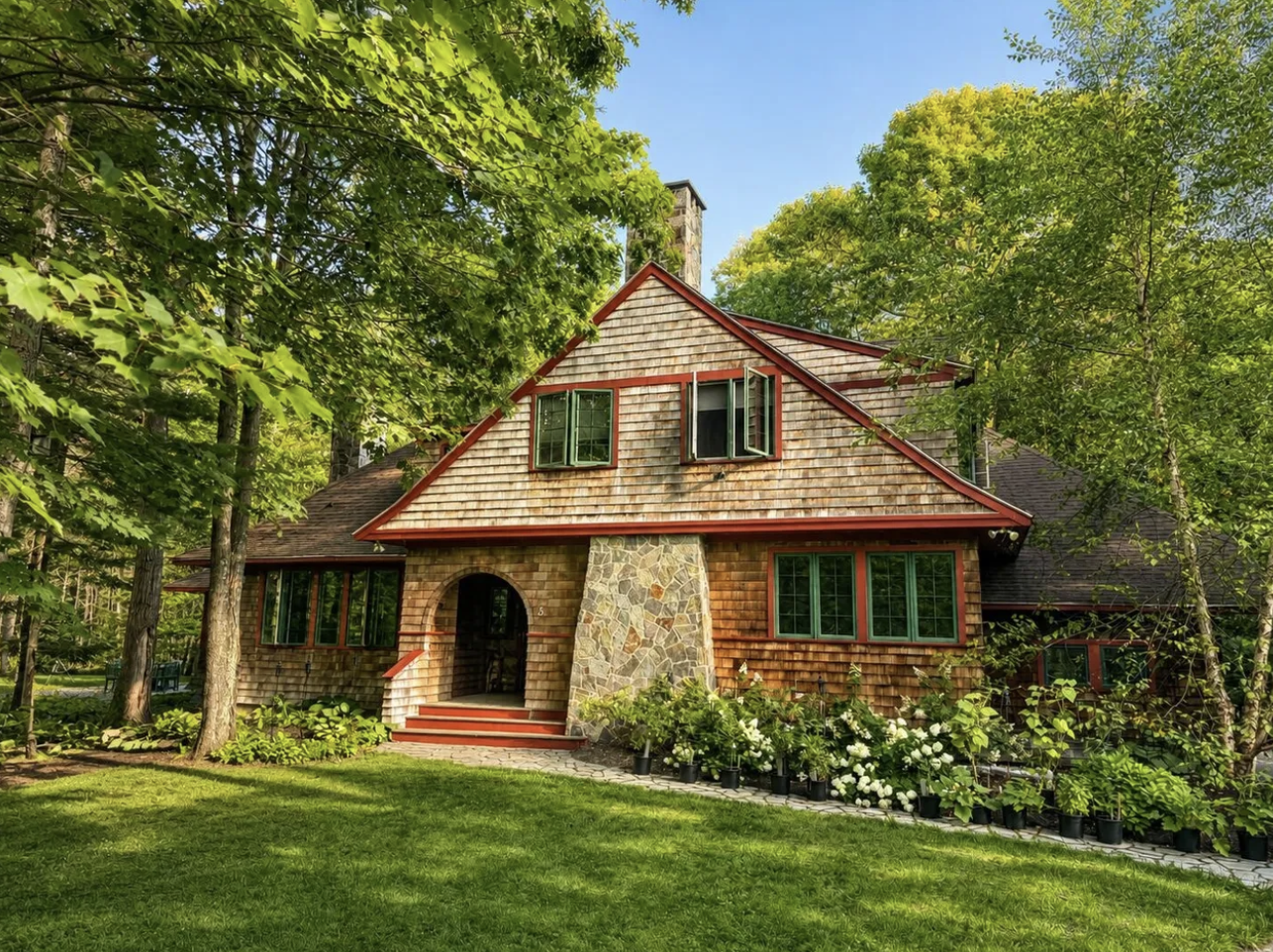
Kennebunkport is rural coastal Maine at its most prestigious. Cape Arundel, Cape Porpoise, and the Kennebunk River corridor deliver the shingle-style architecture, mature landscaping, and multigenerational family character that defines what most Northeast buyers picture when they picture "Maine coast." The town is 90 minutes from Boston, drives without a ferry, and has developed a genuine prestige tier at $5M+ with current active listings reaching $19.3M.
Cape Elizabeth is Portland-adjacent coastal Maine. It functions as a residential suburb of Portland with meaningful oceanfront and near-water inventory but without Kennebunkport's concentrated prestige village character. Prouts Neck is the trophy tier. The rest of the town is quieter, more residential, and priced meaningfully below Kennebunkport at comparable positions. For buyers whose acquisition case requires Portland proximity (airport, hospital, commercial infrastructure), Cape Elizabeth is often the stronger fit.
The Portland Peninsula is a genuinely different product. The Old Port, West End, and Munjoy Hill neighborhoods deliver walkable year-round urban character that neither Kennebunkport nor Cape Elizabeth can match. Portland Peninsula inventory is primarily historic townhouses, brownstones, and condos rather than single-family estates. Prices start meaningfully below Kennebunkport and Cape Elizabeth, and the year-round infrastructure is dramatically stronger.
The Structural Side-by-Side
| Factor | Kennebunkport, ME | Cape Elizabeth, ME | Portland Peninsula, ME |
|---|---|---|---|
| Character | Rural coastal prestige | Portland-adjacent residential | Walkable urban peninsula |
| From Boston | ~90 min | ~2 hr | ~2 hr |
| From New York | ~5.5 hr | ~6 hr | ~6 hr |
| Entry price | ~$1.5M | ~$1.2M | ~$500K |
| Mid-market | $3M-$8M | $2M-$6M | $800K-$2M |
| Top of active market | $19.3M | $16M+ | $3.5M+ |
| Trophy corridor | Cape Arundel | Prouts Neck | West End luxury |
| Inventory type | Shingle estates on lots | Oceanfront, near-water, residential | Historic townhouses, condos |
| Year-round infrastructure | Modest (~3,600 residents) | Moderate (~9,500 residents) | Strong (Portland ~68,000) |
| Airport proximity | ~45 min to Portland Jetport | ~15 min to Portland Jetport | ~10 min to Portland Jetport |
| Walkable town center | Dock Square (small) | Limited | Strong (Old Port, West End) |
| Land Bank fee | None | None | None |
| Mansion tax | None | None | None |
Sources: Realtor.com and MLS inventory data; U.S. Census population estimates; Maine Revenue Services. Verified September 2026.
The Maine Cost Advantage Applies to All Three Markets
The single largest structural advantage that all three Maine coastal markets share is the tax and transfer cost structure. Maine has no Land Bank fee (unlike Nantucket and Martha's Vineyard) and no mansion tax (unlike New York and the Hamptons). Maine Real Estate Transfer Tax applies at $2.20 per $500 on the first $1M and an additional $3.80 per $500 on the portion above $1M (effective November 1, 2025), split 50/50 between buyer and seller. That structural cost differential holds at every price tier and every Maine coastal town.
| Purchase Price | Coastal Maine (buyer-side) | Hamptons NY (buyer-side) | Nantucket MA (buyer-side) |
|---|---|---|---|
| $2M | $8,200 | $25,000 | $40,000 |
| $3M | $14,200 | $52,500 | $60,000 |
| $5M | $26,200 | $137,500 | $100,000 |
| $8M | $44,200 | $252,000 | $160,000 |
| $10M | $56,200 | $385,000 | $200,000 |
Coastal Maine figures reflect 50 percent of total Maine Real Estate Transfer Tax under the post-November-2025 tier structure. Hamptons figures reflect New York State mansion tax buyer-side. Nantucket figures reflect the 2 percent Land Bank fee.
What this means for prestige coastal buyers: An $8M Kennebunkport estate costs the buyer approximately $208,000 less at closing than an equivalent $8M Hamptons position, and approximately $116,000 less than an $8M Nantucket property. Compounded across a multigenerational hold, the Maine cost advantage is materially significant. Buyers whose acquisition case is genuinely cost-sensitive at the trophy tier should include coastal Maine in the evaluation set rather than defaulting to more heavily marketed alternatives.
Kennebunkport: The Prestige Choice
Kennebunkport is the most established coastal Maine prestige market. Cape Arundel is the trophy corridor, running along the Atlantic between Kennebunk Beach and Walker's Point (the Bush family compound). Cape Porpoise is the working harbor village to the east with meaningful character and its own emerging luxury tier. The Kennebunk River corridor delivers protected water access and a distinct architectural inventory.
Character: Understated, multigenerational, oriented to established families with deep Kennebunkport ties. Buyer culture rewards discretion. The Cape Arundel Golf Club, the River Club, and Dock Square anchor the summer social calendar.
Best for: Buyers at $2M+ who specifically want rural coastal Maine prestige, multigenerational family purchases oriented to decades of family use, buyers whose acquisition case is architecturally motivated (shingle style, cape porpoise cottages, historic river estates), and buyers whose primary residence is within reasonable drive distance from Boston or Connecticut.
Pricing: Entry ~$1.5M for meaningful inventory; mid-market $3M-$8M in Cape Arundel and Cape Porpoise positions; current active top at $19.3M.
Cape Elizabeth: The Portland-Adjacent Choice
Cape Elizabeth sits immediately south of Portland, with the Portland Head Light as its most recognized landmark. Prouts Neck is the trophy tier is a private peninsula community with meaningful oceanfront estate inventory. The rest of Cape Elizabeth is more residentially oriented with a mix of oceanfront, near-water, and interior residential inventory.
Character: Quieter than Kennebunkport, more oriented to year-round Portland-area residents, less concentrated prestige village character. Prouts Neck operates as a private community with distinct social infrastructure. Buyer culture is understated.
Best for: Buyers whose acquisition case requires Portland proximity (airport access, hospital, commercial infrastructure), families with primary residences that involve regular Portland-area travel, buyers who prefer quieter residential character over Kennebunkport's more concentrated prestige, and buyers at $1.2M-$5M who want Maine coastal positioning at meaningfully lower entry pricing than Kennebunkport.
Pricing: Entry ~$1.2M for meaningful inventory; mid-market $2M-$6M; Prouts Neck trophy tier at $8M-$16M+.
Portland Peninsula: The Walkable Urban Choice
The Portland Peninsula is genuinely different from either Kennebunkport or Cape Elizabeth. The Old Port historic district holds late 19th century commercial architecture converted to residential and mixed-use inventory. The West End is Portland's leading historic residential neighborhood with meaningful Victorian and Federal architecture. Munjoy Hill offers eastern peninsula waterfront positioning with strong walkable character.
Character: Walkable, year-round, culturally active, oriented to buyers who want urban character with coastal adjacency rather than rural coastal prestige. Portland's restaurant scene, arts infrastructure, and working harbor create a genuinely functional year-round city.
Best for: Buyers whose second-home use pattern includes meaningful shoulder-season and winter use where infrastructure matters, buyers who specifically want walkable urban character over rural coastal prestige, buyers at $500K-$2M who want prestige-tier Maine positioning at meaningfully accessible pricing, and buyers whose acquisition case values year-round activity over summer-community intensity.
Pricing: Entry ~$500K for meaningful Old Port or Munjoy Hill condo inventory; mid-market $800K-$2M for West End historic townhouses and larger condos; top of West End luxury market $2.5M-$3.5M+.
What the Same Budget Buys in Each Market
| Budget | Kennebunkport, ME | Cape Elizabeth, ME | Portland Peninsula, ME |
|---|---|---|---|
| $800K | Below entry | Below entry | Strong West End or Old Port condo |
| $1.5M | Entry tier | Meaningful residential position | Top-tier West End townhouse |
| $3M | Mid-market Cape Arundel-adjacent | Strong oceanfront-adjacent | Top of Portland Peninsula market |
| $5M | Meaningful Cape Arundel | Entry to Prouts Neck | Above market for peninsula |
| $10M+ | Trophy Cape Arundel | Trophy Prouts Neck | Not available on peninsula |
The honest budget analysis: Below $1.5M, the Portland Peninsula is effectively the only viable coastal Maine option; Kennebunkport and Cape Elizabeth do not have meaningful sub-$1.2M inventory. At $1.5M-$3M, all three markets have viable inventory and the choice becomes about which product actually fits the family use pattern. Above $3M, the Portland Peninsula caps out and the comparison becomes Kennebunkport vs. Cape Elizabeth, where the answer depends heavily on whether Portland proximity is a priority.
The Second-Home Use Pattern Question
The single most consequential factor in choosing among these three markets is the honest assessment of the actual second-home use pattern. Buyers who plan only summer use fit different markets than buyers who plan meaningful shoulder-season and off-season use.
Summer-primary use pattern: Kennebunkport is typically the strongest choice. The prestige character, the social infrastructure, the architectural inventory, and the community continuity all reward summer-concentrated use. Cape Elizabeth works but delivers a somewhat quieter summer experience.
Year-round or shoulder-season use pattern: Portland Peninsula is typically the strongest choice. The year-round infrastructure supports genuine winter use in ways that Kennebunkport and Cape Elizabeth do not. Restaurants stay open, cultural institutions operate, and the working harbor provides genuine city activity across all seasons.
Portland-area professional connection: Cape Elizabeth is often the strongest choice. Portland Jetport proximity, Maine Medical Center access, and Portland commercial infrastructure make Cape Elizabeth practical in ways Kennebunkport cannot match.
Which Buyer Belongs in Which Market
Kennebunkport is the better choice for buyers who:
- Have $2M+ in acquisition capital and want established coastal Maine prestige
- Value multigenerational hold potential with architectural character
- Prefer rural coastal village life over urban walkability
- Have Boston-area primary residence with 90-minute drive access as a priority
- Want established prestige social infrastructure (Cape Arundel Golf, River Club)
Cape Elizabeth is the better choice for buyers who:
- Need Portland-area proximity (airport, hospital, commercial)
- Prefer quieter residential character over Kennebunkport prestige concentration
- Have $1.2M-$5M budget and want coastal Maine positioning at lower entry pricing
- Value Prouts Neck-tier private community access at the trophy end
- Plan mixed second-home and part-time Portland-area residence use
Portland Peninsula is the better choice for buyers who:
- Want walkable urban character with year-round infrastructure
- Plan meaningful shoulder-season and winter use
- Have $500K-$2M budget and want prestige Maine positioning at accessible pricing
- Prefer historic townhouse or condo inventory over single-family estates
- Value cultural amenities, restaurants, and working city character
What Buyers Must Verify Before Making an Offer
- Confirm current Maine transfer tax obligation: Under the November 2025 tier structure, purchases above $1M face additional transfer tax on the excess portion.
- Verify town-level property tax rate: Kennebunkport, Cape Elizabeth, and Portland each set distinct mil rates.
- Confirm zoning designation and any historic overlay: Cape Arundel and Portland West End have specific historic district considerations.
- Verify flood zone and coastal exposure: Waterfront positions on all three markets face material coastal considerations.
- Confirm septic and water status if applicable: Cape Elizabeth and Kennebunkport parcels may be on private septic and well.
- Understand HOA or community association status: Prouts Neck operates as a private community with specific governance.
- Model year-round carrying costs realistically: Maine winter heating and property maintenance run materially higher than more temperate coastal markets.
- Verify STR ordinance if rental income is part of the acquisition case: Each town has distinct short-term rental rules.
The bottom line for coastal Maine buyers: Maine's three viable prestige coastal markets each serve genuinely different family profiles. The Maine cost advantage (no Land Bank, no mansion tax, favorable transfer tax structure) applies to all three, making Maine meaningfully more favorable than the Hamptons or Massachusetts islands at every price tier. The decisive question is which product actually fits the family: Kennebunkport's rural prestige, Cape Elizabeth's Portland-adjacent residential, or Portland Peninsula's walkable urban character. Match the market to the honest use pattern, not to the assumed prestige narrative.
Frequently Asked Questions
Which coastal Maine town is best for a second home?
Kennebunkport, ME is typically the strongest choice for buyers prioritizing prestige, Cape Arundel architectural character, and multigenerational hold. Cape Elizabeth, ME is stronger for buyers needing Portland-area access and preferring quieter residential character. Portland Peninsula, ME fits buyers who want walkable urban character with year-round infrastructure. The right choice depends on distance from primary residence, use pattern, and whether the buyer prioritizes rural prestige or urban walkability.
How much does a coastal Maine home cost in 2026?
Kennebunkport runs approximately $1.5M entry to $19.3M top of active market. Cape Elizabeth runs approximately $1.2M entry to $16M+ Prouts Neck oceanfront. Portland Peninsula condo and townhouse inventory runs approximately $500K entry to $3.5M+ West End luxury. Maine has no Land Bank fee and no mansion tax; the November 2025 transfer tax tier added modest additional cost above $1M but Maine remains the lowest-closing-cost prestige coastal market in the Northeast.
Does Maine have a mansion tax?
No. Maine does not impose a mansion tax. Maine Real Estate Transfer Tax applies at $2.20 per $500 on the first $1M and $3.80 per $500 on the portion above $1M (effective November 1, 2025), split 50/50 between buyer and seller. On a $5M Maine coastal purchase, the buyer's share is approximately $26,200, compared to $137,500 in the Hamptons and $100,000 on Nantucket.
Is Cape Elizabeth or Kennebunkport closer to Boston?
Kennebunkport is closer to Boston. Boston to Kennebunkport is approximately 90 minutes via I-95 North. Boston to Cape Elizabeth is approximately 2 hours to 2 hours 15 minutes. Cape Elizabeth sits adjacent to Portland, roughly 30 minutes north of Kennebunkport. Boston buyers valuing shorter drive time typically choose Kennebunkport; buyers valuing Portland-area access often accept the additional 30 minutes to reach Cape Elizabeth.
Can you live in Portland Maine year-round as a Boston second-home buyer?
Yes. Portland, ME functions as a genuine year-round city with meaningful commercial infrastructure, restaurants, arts, and a working port. The Portland Peninsula supports full year-round urban living in a way that rural coastal Maine towns like Kennebunkport cannot. For buyers whose second-home use pattern includes shoulder-season and winter use, Portland delivers infrastructure Kennebunkport and Cape Elizabeth cannot match. The trade-off is urban character rather than rural coastal prestige.
Evaluating Kennebunkport, Cape Elizabeth, or the Portland Peninsula for a specific second-home use case and want an independent read on which market actually fits your family, budget, and long-term plans? I work with vetted local buyer's agents across all three coastal Maine markets and can connect you with representation that understands the specific dynamics before you commit capital.
Submit a Private InquiryOr reach Peter directly: