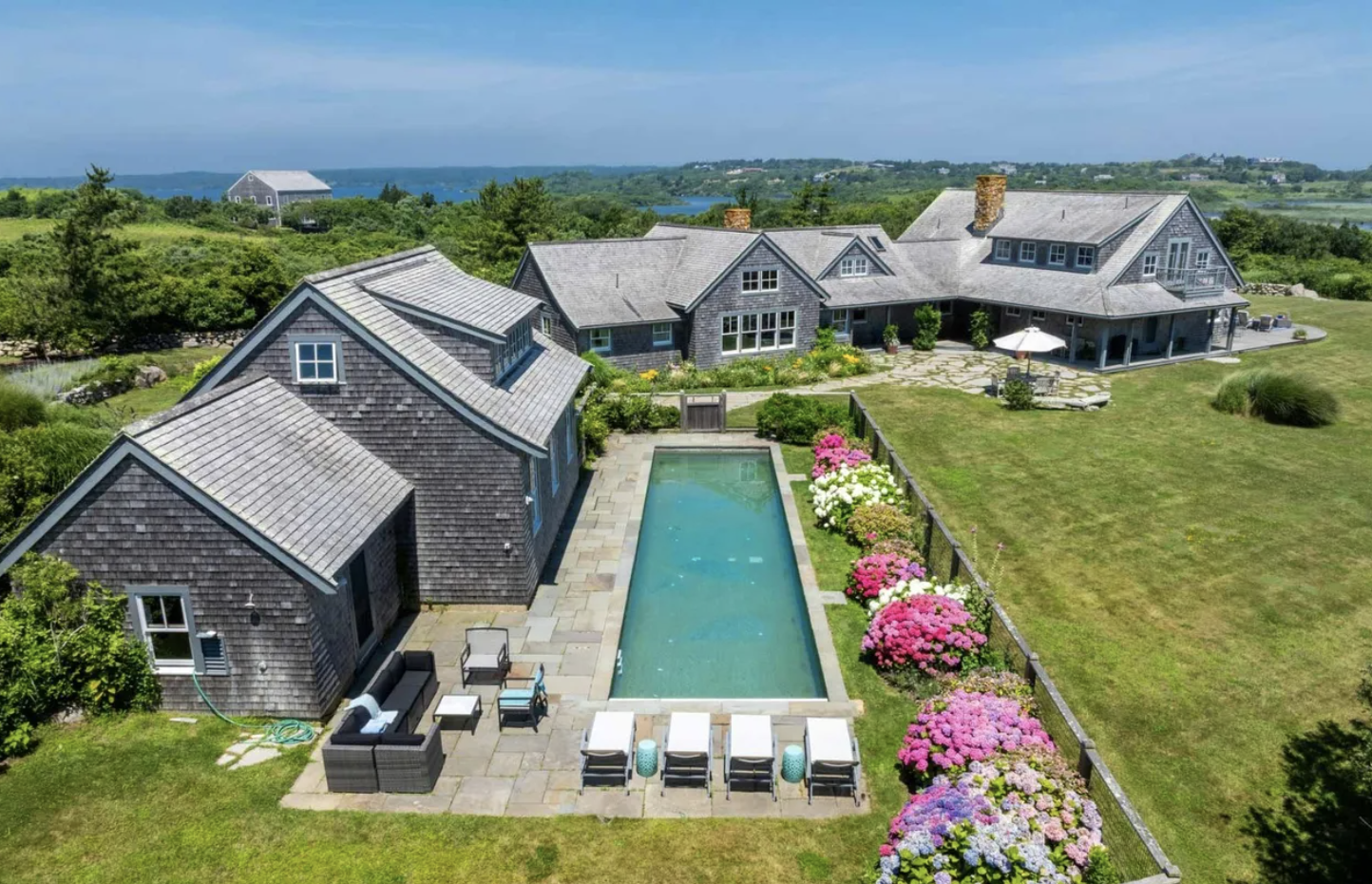
Chilmark, MA is the rural agricultural up-island town of Martha's Vineyard. Entry pricing starts around $2M for modest interior parcels. Mid-market inventory on larger agricultural lots runs $4M to $10M. South shore waterfront along Lucy Vincent and Squibnocket reaches $12M to $20M+, with trophy positions above $25M. The town enforces 3-acre minimum residential zoning, hosts the Menemsha working fishing harbor, and restricts its two primary beaches to town residents. For buyers who want rural landscape, maximum privacy, and the materially quieter up-island buyer culture over Edgartown's formal walkable village prestige, Chilmark is typically the strongest Martha's Vineyard choice.
Why Chilmark Is Edgartown's Structural Opposite
Last week's Edgartown buyer's guide described a formal old-money walkable harbor town centered on a historic commercial village. Chilmark is everything that Edgartown is not. Both towns sit at the top of the Martha's Vineyard market. Both reach trophy pricing above $20M on their best waterfront. Both deliver meaningful prestige. But the actual product each offers to a buyer is structurally different in almost every way that matters.
Chilmark is up-island, the term used on Martha's Vineyard for the three western towns (Chilmark, West Tisbury, and Aquinnah) that sit beyond the central down-island commercial core. The physical landscape is rural and agricultural, preserved by the town's 3-acre minimum residential zoning and reinforced by meaningful conservation easements held by the Martha's Vineyard Land Bank and the Sheriff's Meadow Foundation. Stone walls run along pastures. Sheep graze on actual working farms. The Chilmark Pond, Nashaquitsa Pond, and Menemsha Pond create a protected inland waterway system with its own ecology and character.
The social character matches the landscape. Where Edgartown's buyer culture is formal, structured, and oriented to traditional East Coast old-money infrastructure, Chilmark's buyer culture is deliberately quieter, more oriented to privacy, and more comfortable with informal rural rhythm. Writers, media figures, Supreme Court justices, and families who specifically want agricultural preservation character gravitate here. The Chilmark Community Center hosts summer programming, the Chilmark Store serves as the informal town gathering point at Beetlebung Corner, and the beaches do the rest.
For buyers, Chilmark delivers a specific thesis: pay meaningful capital for maximum landscape privacy and the quietest trophy-tier Vineyard identity. Buyers who understand this thesis acquire well. Buyers who choose Chilmark because it sounds prestigious without valuing the rural landscape character typically feel the isolation rather than the privacy.
The Structural Side-by-Side
| Factor | Chilmark, MA | Edgartown, MA |
|---|---|---|
| Character | Rural, agricultural, preservation-focused | Formal, walkable, old-money |
| Location on island | Up-island (western) | Down-island (southeastern) |
| Minimum residential lot size | 3 acres | Varies; historic district compressed lots |
| Commercial infrastructure | Beetlebung Corner, Chilmark Store | Walkable historic Main Street |
| Working harbor | Menemsha (active fishing) | Edgartown Harbor (yacht, recreational) |
| Primary beaches | Lucy Vincent, Squibnocket (resident-only) | South Beach (public), State Beach (public) |
| Buyer culture | Writers, media, arts, privacy-first | Traditional old-money, formal social structure |
| Social infrastructure | Chilmark Community Center; informal | Edgartown Yacht Club, Harbor View Hotel; formal |
| Entry pricing | ~$2M | ~$1.5M |
| Mid-market range | $4M-$10M | $3M-$8M |
| Trophy tier | $15M-$25M+ | $15M-$25M+ |
| Daily life requires vehicle | Yes | No (in-village) |
Sources: Town of Chilmark; Town of Edgartown; Martha's Vineyard Commission; Martha's Vineyard Land Bank; Realtor.com and MLS inventory for 2026. Comparisons illustrative; specific parcels vary materially.
The Four Chilmark Submarkets
Chilmark Center and Beetlebung Corner
The informal town center sits at Beetlebung Corner, where State Road meets South Road and Middle Road. The Chilmark Store, the post office, and a handful of local establishments cluster here. This is not a walkable commercial village in the Edgartown sense, but it is the geographic and social anchor of the town. Properties in the surrounding area sit on meaningful acreage within reasonable driving distance of Menemsha, Lucy Vincent, and the Chilmark Community Center. Mid-market inventory typically runs $3M to $8M for well-sited Chilmark Center area homes.
Best for: Buyers who want central Chilmark access without committing to the more remote south shore or Menemsha-adjacent positions. Families who value proximity to Chilmark's modest commercial and civic infrastructure.
Menemsha and the North Shore
Menemsha is a working fishing village at the western tip of Chilmark, where Vineyard Sound meets Menemsha Pond. The harbor hosts active commercial fishing operations. The Menemsha Fish Market sells direct from the dock. Properties with Menemsha Pond or Vineyard Sound access from the Chilmark side command meaningful premiums and are among the most prized up-island positions. Mid-market Menemsha-area inventory runs $4M to $10M; waterfront reaches $10M to $20M+.
Best for: Buyers who value authentic maritime character, direct harbor or sound access, and the specific identity that Menemsha's working fishing village creates. Families with meaningful boating interests oriented to north shore and Vineyard Sound access.
South Shore (Lucy Vincent and Squibnocket)
The south shore holds Chilmark's trophy tier. Lucy Vincent Beach and Squibnocket Beach stretch along the Atlantic facing south, with meaningful bluff and dune positioning behind. The south-of-South-Road corridor holds most of the town's $15M-plus waterfront. Trophy oceanfront estates in this corridor transact rarely and typically off-market. Larger land parcels run from $8M to $25M+, with specific trophy positions reaching higher.
Best for: Trophy-tier buyers who specifically want south-facing Atlantic oceanfront with meaningful acreage, Lucy Vincent or Squibnocket Beach proximity, and the maximum privacy that the south shore corridor delivers. Multigenerational family purchases oriented to decades of hold.
Chilmark Hills and Up-Island Interior
The interior Chilmark landscape rises into actual hills, delivering elevated positions with meaningful views across the Vineyard Sound and the island interior. This corridor includes the Peaked Hill area and the up-island agricultural belt. Properties here typically sit on 3 to 20+ acres with working or formerly working agricultural character. Pricing runs from $2M for modest interior inventory to $10M+ for meaningful agricultural estates with historic character.
Best for: Buyers who value elevated views, working or preserved agricultural character, and meaningful acreage without the full south shore waterfront premium. Families oriented to privacy and landscape over direct beach access.
Chilmark Pricing in Context
| Tier | Price Range | Typical Inventory |
|---|---|---|
| Entry | $2M-$3M | Modest interior parcels, basic cottages on 3+ acres |
| Mid-market interior | $3M-$6M | Beetlebung-area and Chilmark Hills homes with acreage |
| Larger agricultural estates | $6M-$10M | 10+ acre parcels, meaningful architectural quality |
| Menemsha-adjacent | $8M-$15M | Pond or Sound access, Menemsha village proximity |
| South shore waterfront | $12M-$20M | Lucy Vincent or Squibnocket access, bluff positions |
| Trophy | $20M-$25M+ | Landmark south shore oceanfront with substantial acreage |
Typical 2026 price bands based on recent Chilmark MLS inventory and off-market transaction patterns. Trophy Chilmark waterfront frequently transacts off-market and may not appear in public data. Actual pricing depends on parcel characteristics, water access, and current market conditions.
The 3-Acre Zoning Is the Point
Chilmark's 3-acre minimum residential zoning is not a bureaucratic detail. It is the single structural mechanism that produces the rural character the town is known for. By enforcing minimum lot sizes materially larger than the rest of Martha's Vineyard (Edgartown allows down to 1-acre in many zones; some Vineyard towns go smaller), Chilmark permanently limits buildable density across the town. The result is a landscape that genuinely looks the way most buyers picture rural coastal New England.
For buyers, the practical implications are specific:
- Acquisition minimum size is larger: A Chilmark property is typically a larger parcel than a comparable Edgartown or Oak Bluffs property, which supports the higher entry pricing.
- Teardown-and-rebuild math is different: Expansion within the 3-acre framework is generally feasible; adding density by subdividing is generally not.
- Neighbor density is low: Three-acre minimum means fewer houses per mile of road. Noise, visual density, and crowding are structurally limited.
- Long-term appreciation is supported: Zoning that permanently limits buildable supply is one of the most reliable structural supports for long-term appreciation. Chilmark's zoning has held firm for decades.
Resident-Only Beach Access Is a Real Ownership Benefit
Lucy Vincent Beach and Squibnocket Beach are the two primary south shore Chilmark beaches, and both require Chilmark town residency or a town-issued beach sticker for access. The requirement is enforced by town beach attendants during summer season. For buyers acquiring in Chilmark, this resident-only access is one of the strongest practical features of ownership.
Comparison matters. South Beach in Edgartown is open to the general public. State Beach between Oak Bluffs and Edgartown is public. Most Northeast coastal market beaches are public. Chilmark's resident-only south shore beaches produce an entirely different daily experience: parking is never an issue for residents, crowding is structurally limited, and the beach culture is oriented to the town rather than to seasonal tourism. On the hottest summer day, Lucy Vincent and Squibnocket operate at a different density than any public beach on the island.
The honest value of resident-only beaches: Buyers evaluating Chilmark versus other Vineyard towns should model this benefit explicitly. Over a multigenerational hold, resident-only beach access translates into decades of family beach experience that no other Vineyard town can match at this quality level. For families whose intended use pattern centers on beach life, the Chilmark beach access alone can justify the pricing premium over Oak Bluffs, Tisbury, or down-island alternatives.
The Martha's Vineyard Land Bank Fee Applies to Chilmark
Any Chilmark residential acquisition triggers the Martha's Vineyard Land Bank fee: 2 percent of the purchase price paid entirely by the buyer at closing. The fee is uniform across all six MV towns. On a $10M Chilmark trophy acquisition, the Land Bank fee alone is $200,000 at closing in addition to standard Massachusetts deed transfer tax.
| Purchase Price | MV Land Bank Fee (2%) |
|---|---|
| $3M | $60,000 |
| $5M | $100,000 |
| $10M | $200,000 |
| $15M | $300,000 |
| $25M | $500,000 |
Calculated at the statutory 2 percent rate. First-time buyer exemptions and other statutory exemptions may apply; verify with counsel before closing. See the Martha's Vineyard Land Bank Fee Buyer's Guide for full exemption analysis.
Importantly, the Land Bank fee has been a direct contributor to Chilmark's preserved rural landscape. Over four decades, the MV Land Bank has used the fee to acquire thousands of acres of island open space, including substantial Chilmark conservation holdings. Chilmark buyers paying the fee are directly funding the mechanism that produces the landscape they are acquiring into.
What Chilmark Delivers That Other Vineyard Towns Cannot
Working Rural Landscape
No other Vineyard town has Chilmark's density of working agricultural land, preserved stone walls, and 3-acre-minimum zoning enforcement. The landscape is not styled rural. It is actually rural, with working farms, grazing sheep, and open fields that remain actively used. For buyers who value authentic agricultural character over suburbanized or seasonal-colony landscape, Chilmark is the only Vineyard answer.
Resident-Only Beach Access
Lucy Vincent Beach and Squibnocket Beach are available only to Chilmark residents. This single feature materially differentiates Chilmark from every other Vineyard town. The daily beach experience is structurally different.
Menemsha as a Working Harbor
Menemsha is a genuinely functional commercial fishing village, not a yacht basin or a decorative harbor. The Menemsha Fish Market, the active fishing fleet, and the maritime infrastructure deliver authentic character that no other Vineyard harbor matches. Properties with Menemsha-adjacent positioning tap into this specifically.
Quiet Trophy Culture
Chilmark's trophy tier attracts buyers who specifically want to avoid visibility. Where Edgartown's formal social infrastructure is a feature for its buyer culture, Chilmark's deliberate informality is a feature for its. Many Chilmark trophy acquisitions never surface in public data because the buyer culture rewards discretion and the transactions move through established local networks.
Who Belongs in Chilmark
Chilmark is typically the strongest Vineyard choice for buyers who:
- Specifically value rural agricultural landscape and preservation-oriented zoning
- Want maximum privacy and low-density neighbor character
- Prioritize resident-only beach access over walkable village infrastructure
- Appreciate authentic maritime character at Menemsha over yacht-club formality
- Fit culturally with the writers, media figures, and arts-industry buyer community
- Have $4M+ budgets that reach meaningful Chilmark inventory on larger parcels
Chilmark is typically not the right fit for buyers who:
- Want walkable village life and daily commercial infrastructure on foot
- Prefer formal old-money social structure (Edgartown fits better)
- Have entry-level Vineyard budgets ($600K-$2M) that do not reach meaningful Chilmark inventory
- Require Victorian cottage architecture or stronger year-round infrastructure (Oak Bluffs or Tisbury fit better)
- Value direct Atlantic oceanfront in a public-beach framework (Edgartown Katama or down-island fits better)
- Expect active seasonal social scenes (Chilmark is structurally quieter)
The honest read on Chilmark acquisition: Chilmark is Martha's Vineyard's most private and most agriculturally preserved town. Buyers who thrive here specifically want what Chilmark offers: rural landscape, 3-acre density, resident-only beaches, informal cultural rhythm, and the quietest trophy buyer culture on the Vineyard. Buyers who choose Chilmark because it is the "second best" Vineyard town after Edgartown without valuing these specific features often feel the isolation rather than the privacy. Match the town to the family's actual use pattern and cultural preferences, not to a comparative ranking.
What Buyers Must Verify Before Making an Offer
- Confirm submarket: Chilmark Center, Menemsha, South Shore, or Chilmark Hills each have distinct characteristics and buyer profiles.
- Verify lot size and zoning compliance: Chilmark enforces 3-acre minimum zoning strictly. Non-conforming lots may face specific restrictions on expansion or redevelopment.
- Confirm any conservation easements: Many Chilmark parcels carry Land Bank or Sheriff's Meadow Foundation easements that permanently limit development. Verify the easement scope.
- Review town building and permit history: Prior applications, approvals, denials, and any active conditions transfer with the property.
- Model the 2 percent Martha's Vineyard Land Bank fee: Applied at closing to the buyer. On a $10M purchase this is $200,000 out of pocket at closing.
- Confirm beach sticker eligibility: Town residency establishes Lucy Vincent and Squibnocket Beach access. Confirm the mechanics with Chilmark town hall before closing.
- Verify Chilmark STR ordinance: If rental income is part of the acquisition case, verify current permit status and framework.
- Confirm flood zone and coastal exposure: South shore waterfront, Menemsha-adjacent, and pond-adjacent positions face material coastal and flood considerations.
- Understand year-round carrying costs: Rural Chilmark positions may face higher landscape maintenance and infrastructure costs than village-centered alternatives.
Chilmark vs. the Other Vineyard Towns
| Town | Character | Best Fit vs. Chilmark |
|---|---|---|
| Chilmark | Rural agricultural, 3-acre zoning, preservation | Baseline |
| Edgartown | Formal walkable harbor village, old-money | Opposite: village over rural, formal over informal |
| West Tisbury | Rural, even quieter than Chilmark, lower density | Most similar: rural, but less waterfront access |
| Aquinnah (Gay Head) | Tribal governance, dramatic landscape, remote | Even more remote; distinct cultural identity |
| Oak Bluffs | Victorian gingerbread, walkable, lower entry pricing | Walkable and informal but denser, lower price |
| Tisbury (Vineyard Haven) | Commercial ferry landing, year-round working town | Year-round working-town over rural prestige |
Frequently Asked Questions
What makes Chilmark different from other Martha's Vineyard towns?
Chilmark, MA is the rural agricultural up-island town of Martha's Vineyard. It is defined by preservation-oriented zoning that enforces 3-acre minimum residential lot sizes, a working fishing village at Menemsha, and private resident-only beaches (Lucy Vincent and Squibnocket). Where Edgartown delivers formal walkable prestige, Chilmark delivers rural landscape, meaningful privacy, and a quieter buyer culture. It attracts writers, media figures, and families who specifically want agricultural preservation character and low density.
How much does a house in Chilmark cost in 2026?
Chilmark, MA residential pricing in 2026 ranges from approximately $2M entry for modest interior parcels to $25M+ for landmark Chilmark waterfront. Mid-market inventory on larger agricultural lots runs $4M to $10M. South shore waterfront along Lucy Vincent and Squibnocket reaches $12M to $20M+. Chilmark's 3-acre minimum zoning structurally supports higher absolute per-parcel pricing than Edgartown's compressed village lots.
Is Chilmark walkable?
No. Chilmark is not walkable in the way Edgartown Village or Vineyard Haven are. The town's rural character and preservation zoning spread residential inventory across large agricultural parcels, and daily life requires vehicle access. Beetlebung Corner is a small commercial hub with the Chilmark Store, a post office, and a few local establishments, but it is not a walkable commercial village. For buyers who value walkable life, Chilmark is typically the wrong fit. The rural non-walkable character is exactly what Chilmark buyers specifically want.
What is Menemsha and why does it matter?
Menemsha is the working fishing village in the town of Chilmark, at the western end of Vineyard Sound. It is one of the most photographed working harbors in New England and the site where the film Jaws was filmed. Menemsha remains a functional commercial fishing harbor with lobster boats, swordfishing vessels, and the Menemsha Fish Market selling direct from the dock. For Chilmark buyers, Menemsha delivers authentic maritime character that cannot be replicated in more suburbanized coastal markets.
Do Chilmark beaches require town residency?
Yes. Lucy Vincent Beach and Squibnocket Beach, the two primary Chilmark south-shore beaches, require Chilmark town residency or a town-issued beach sticker for access. This is enforced by town beach attendants during summer season. For Chilmark property owners, this resident-only beach access is one of the strongest structural features of ownership. It materially differentiates Chilmark from other Vineyard towns where primary beaches are open to the general public.
Evaluating a specific Chilmark acquisition and want an independent read on which submarket (Chilmark Center, Menemsha, south shore, or up-island interior) actually fits your family use pattern, how the 3-acre zoning and conservation easements affect your plans, and whether Chilmark's rural culture matches your family values? I work with vetted Martha's Vineyard buyer's agents and can connect you with representation that understands Chilmark's submarket-level dynamics and off-market access before you commit capital.
Submit a Private InquiryOr reach Peter directly: